Geotechnical site investigation forms the critical first step in any construction or infrastructure project across the Geelong region. This category encompasses all subsurface exploration activities designed to characterise soil, rock, and groundwater conditions before design and construction commence. In Geelong's diverse geological setting, these investigations are not merely a regulatory checkbox but a fundamental engineering necessity that directly influences structural safety, foundation design, and long-term project viability.
The importance of thorough investigation in Geelong cannot be overstated, given the region's complex and variable ground conditions. From the reactive basaltic clays of the Werribee Plains to the ancient sedimentary formations of the Barrabool Hills and the unconsolidated alluvial deposits along the Barwon River corridor, subsurface conditions can change dramatically over short distances. These variations demand a tailored investigative approach, often beginning with targeted exploratory test pit excavations to visually assess shallow strata and extending to deeper techniques where bedrock or specific engineering parameters must be determined.
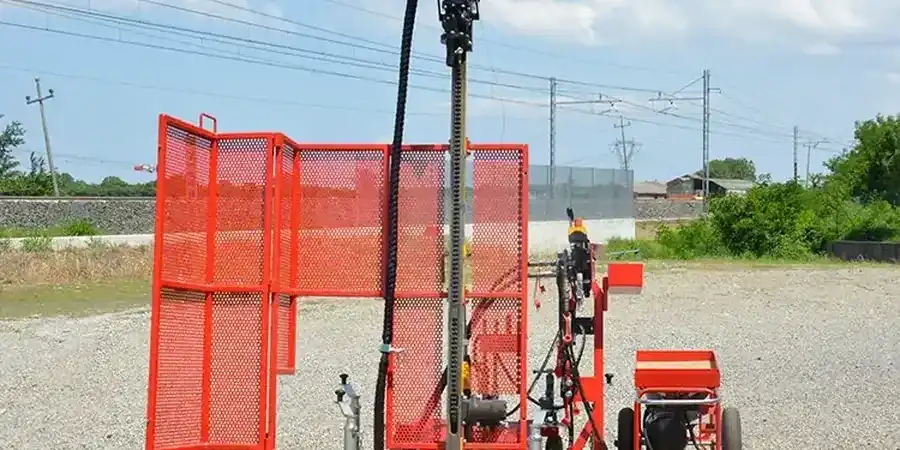
Australian Standard AS 1726-2017 provides the overarching framework for geotechnical site investigations nationwide, establishing minimum requirements for planning, execution, and reporting. In Victoria, additional guidance comes from the Building Regulations 2018 and local council requirements specific to the City of Greater Geelong. These standards mandate investigation depth, sampling frequency, and testing protocols based on the geotechnical complexity of the site and the proposed structure's risk profile. Compliance ensures that investigations yield reliable data for foundation design, slope stability analysis, and earthworks specification.
Projects requiring formal geotechnical investigation span residential subdivisions in growth corridors like Armstrong Creek and Lara, commercial developments in the Geelong CBD, and major infrastructure works including the Geelong Port expansion and Barwon Heads Road upgrades. For medium to high-density developments, in-situ testing such as the SPT (Standard Penetration Test) becomes essential to quantify soil density and strength parameters at depth. Industrial facilities, retaining walls exceeding one metre, and any structure on potentially compressible or expansive soils also trigger mandatory investigation requirements under the National Construction Code.
Quick answers
What is the purpose of a geotechnical site investigation?
A geotechnical site investigation determines the physical, chemical, and mechanical properties of subsurface materials at a project site. It identifies soil and rock strata, groundwater conditions, and potential geohazards such as expansive clays, fill, or soft deposits. This information is essential for designing safe foundations, assessing slope stability, planning earthworks, and ensuring compliance with the National Construction Code and Australian Standard AS 1726-2017.
When is a geotechnical investigation mandatory for a project in Geelong?
A geotechnical investigation is mandatory for most construction projects under the Building Regulations 2018 and the National Construction Code. It is required for all Class 2 to 9 buildings, residential subdivisions, retaining walls over one metre, and any structure on sites with known reactive soils, fill, or slopes. The City of Greater Geelong may also require an investigation as part of the planning permit process for developments in areas prone to landslip or coastal erosion.
What geotechnical challenges are common in the Geelong region?
Geelong's geology presents several challenges including highly reactive basaltic clays in the northern plains that shrink and swell with moisture changes, soft alluvial silts and clays along the Barwon River floodplain, and variable depth to bedrock across the Barrabool Hills. Coastal areas may encounter acid sulfate soils and shallow saline groundwater. These conditions require careful investigation to design appropriate foundations and mitigate movement risks.
How deep should a geotechnical investigation go for a typical residential project?
Investigation depth depends on the foundation type, loads, and subsurface conditions but generally follows AS 1726-2017 guidelines. For a standard residential slab-on-ground, boreholes or test pits typically extend 2 to 3 metres below the proposed founding level, or until competent bearing strata are confirmed. Where deep foundations are contemplated or soft soils are encountered, investigation depths may exceed 10 metres to assess pile bearing capacity and settlement potential.